英語 第6章
長文読解(物語・対話)
問題編
【既習/完成/最低25問】物語・対話文。
解く前に:この章の覚え方・戦い方
別冊を開かなくてよい。ここで対応表を指差し確認してから問題に入る。解けたあとも誤答はこの一覧に戻す。
必暗この章で使う熟語
左の英語を見て右の意味を言う。意味だけでなく、目的語・to〜ing の形までセットで声に出す。
必暗この章の核心語彙
左の単語↔右の意味。単語帳を眺めるだけでなく、例文の空所に入れられるかで確認する。
戦い方長文の読み方
設問先読み→段落対応。NOT true は本文根拠に線を引いてから選ぶ。
- 先読み設問語を先に見てから本文へ入る
- 根拠選択肢の語句が本文のどこにあるか指差す
戦い方英語の戦い方
文法・語彙の独立問題と長文の時間配分を最初に決める。
- 手順長文は設問先読み→段落対応。全部精読してから設問は遅い
- 手順文法・語彙の独立問題を先に片づけるか、長文の合間に挟むかを最初に決める
- 手順NOT true / 近い選択肢は本文根拠に線を引いてから選ぶ
- 手順見直し7分:三単現・時制・書き損じ。英作文は設問条件のチェックリスト
- 手順毎日15分:学習中の単元の「受験で押さえる」を音読+書き
- 手順毎日30〜50分:弱点単元の⑤⑥または⑦を1セット
- 手順近い用語・近い年代・近い数値の取り違え
- 手順問題文の一部だけ合っていて結論がずれる選択肢
① 導入
物語・対話を読み、行動・会話・反応から心情と結末を根拠付きで読み取ります。
設問に答える前に、本文の根拠箇所に印を付けましょう。
② 基本概念
- 登場人物と関係
- 心情変化(行動・会話・反応)
- 対話の応答と態度
- 象徴・結末の意味
③ 図解
誰が何を求めているか。図では、矢印の始点と終点、色分け、並び順を順に追い、本文のどの判断に対応するか確認する。
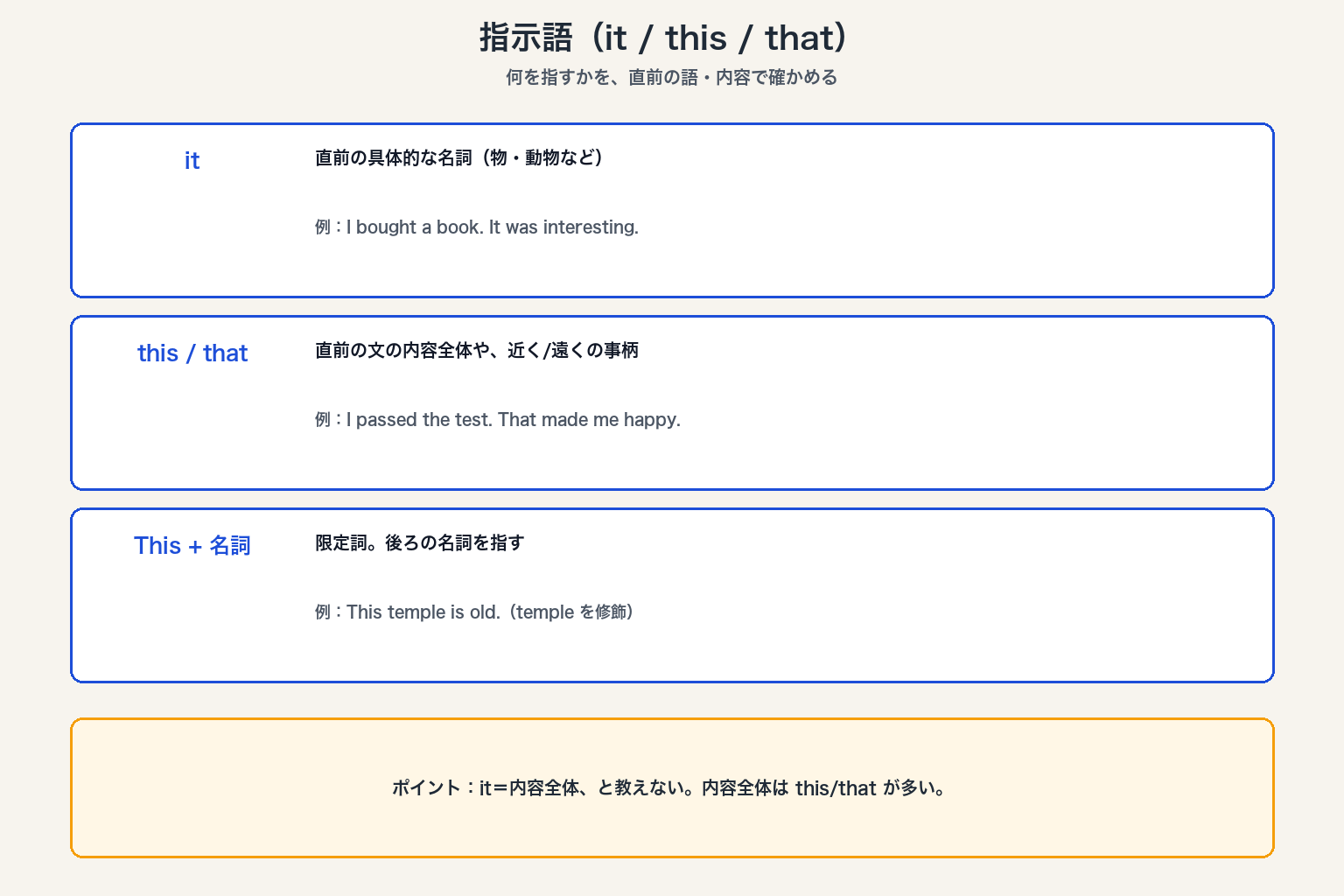
人物・出来事の参照を追う。図では、矢印の始点と終点、色分け、並び順を順に追い、本文のどの判断に対応するか確認する。
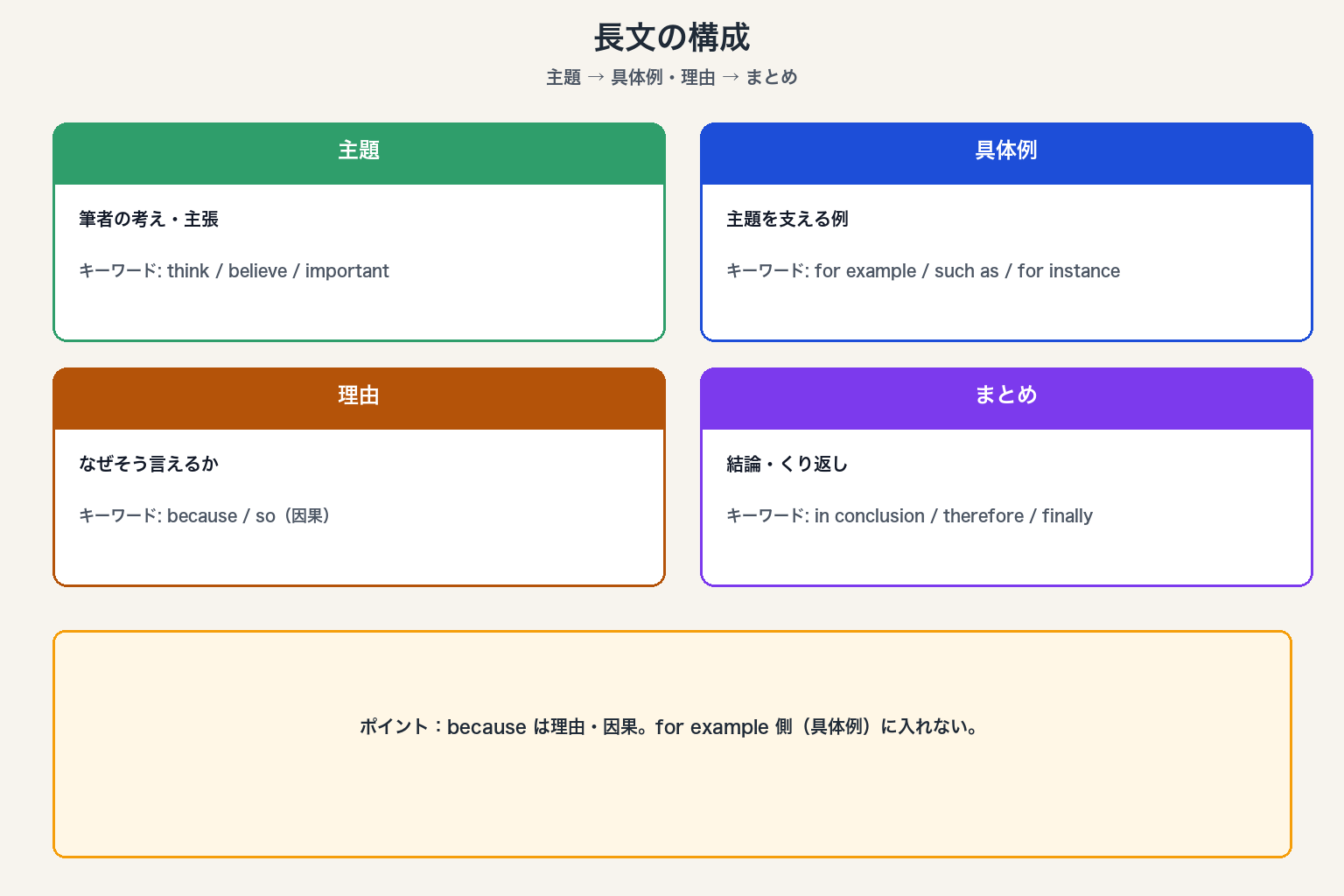
起→山→結を意識。図では、矢印の始点と終点、色分け、並び順を順に追い、本文のどの判断に対応するか確認する。
④ 例題
Story 1: The Lost Map(約145語)
Maya found an old folded map in her grandmother’s desk drawer. The ink was pale, but she could still read a tiny park drawn near the station. When she walked there after school, she saw only shops and a narrow street where children once played. Disappointed, she asked a shop owner who was arranging flowers outside. The woman smiled and said, “That park became this flower shop many years ago. Your grandmother used to sit under the tree that stood here and share snacks with neighbors.” Maya bought a small plant, placed it by the window at home, and wrote a short note: “The park lives here.” Looking at the green leaves, she felt less sad. The map had not lied; the place had simply changed its shape, and now Maya could keep a piece of that memory alive in her daily life.
マヤが最初に見つけたものはどれか。
地図が示していた場所を本文に即して書け。
店主によると、公園はどうなったか。
⑤ 基本問題
マヤがメモに「The park lives here」と書いた意味を、本文根拠をふまえて40字以内で解釈せよ。
模範:
Dialogue 1: Piano Practice(約125語)
Ken: I practiced the piano for two hours yesterday, but I still make the same mistakes in the middle of the song. I feel like the practice is useless.
Lia: Mistakes are not the end. They show you what to fix next. Why don’t you record one song and listen carefully?
Ken: That sounds scary. I don’t want to hear my own errors on a recording.
Lia: Start with only thirty seconds. Small steps work better than long, tired practice that leaves you discouraged.
Ken: Thirty seconds… all right. I’ll try tonight, but only if you promise not to laugh.
Lia: I won’t laugh. I’ll help you mark the difficult bars with a pencil. Then tomorrow we can practice those parts slowly together before the next lesson.
ケンの悩みはどれか。
リアが勧めた具体的な方法を一つ、英語で書け。
ケンの最後の態度として最も近いものはどれか。
リアの助言の意図を40字以内で。
模範:
Story 2: Night Bus(約145語)
On a crowded night bus, Riku gave his seat to an elderly man who was holding a thin fishing bag. The man thanked him softly and began talking about fishing with his grandson by the river every summer. Riku listened, even though he felt sleepy after club practice and wanted only to close his eyes. When Riku’s stop came, the man pressed a small paper crane into his hand and whispered, “For your kindness.” Riku kept the crane in his wallet for years. Whenever he opened it before a difficult test or a long trip, he remembered that quiet conversation and the man’s gentle voice. He did not become famous for that night, but he often chose to stand so that someone else could sit. The crane was light, yet it reminded him that a small choice can travel farther than one bus ride.
リクがした行為はどれか。
老人が孫と何をした話をしたか。
紙の鶴の意味として本文に最も近いものはどれか。
リクが鶴を長年保管した理由を、本文の行動と結びつけて40字以内で推測せよ。
模範:
⑥ 標準問題
三つの本文に共通して重要な読解観点はどれか。
Dialogue 1でリアが言う small steps の具体例。
Story 1の結末でマヤがしたことはどれか。
対話文でケンの態度が変わる手がかりとなる表現を一つ挙げよ。
模範:
Story 2で鶴を渡した人物。
マヤが店主に話しかけた理由はどれか。
Story 2の最終文が示す一般化された教訓に最も近いものはどれか。
⑦ 応用・入試形式(長め物語+梯子設問)
Story 3: The Spare Key(約240語)
After the school festival, Hana stayed late to wash paintbrushes in the art room. When she finally locked the door, she realized her house key was missing. She searched her bag twice, then checked the hallway floor. Nothing. Her phone battery was almost dead, so she could not call for long. Feeling her face grow hot, she walked to the staff room and explained the situation to Mr. Sato, the teacher on duty.
Mr. Sato did not scold her. He lent her the office phone and waited while she spoke to her mother. “There is a spare key under the flowerpot,” her mother said, “but come home carefully.” On the way, Hana kept thinking about how careless she had been. Near the gate she found her own key stuck between two textbooks in a side pocket she rarely used. She laughed once, then felt embarrassed again.
The next morning she returned early, thanked Mr. Sato, and offered to help clean the art sinks for a week. He smiled and said, “Learning to ask for help is also part of growing up.” Hana still felt shy, but she wrote the words in her notebook. Weeks later, when a younger student lost a train pass, Hana walked with him to the office instead of saying only “That’s too bad.” The spare key at home had solved one night, yet the real change was that Hana stopped treating trouble as something she had to hide.
【細部】祭りのあと、ハナが美術室でしていたことはどれか。
【細部】母親が電話で伝えたことは何か。
【推論】ハナが翌朝先生に礼をし、掃除を申し出た理由として最も適切なものはどれか。
【正誤】本文の内容と一致しないもの(NOT true)はどれか。
【要旨】Story 3のタイトル/主題として最も適切なものはどれか。
【記述】最終文が示すハナの変化を40字以内で説明せよ。
模範:
【追加】物語の心情根拠
(1) 主人公の行動の理由を本文から一言で(英語可)。
(2) Which is NOT true?
(3) 行動から心情を読む手順を40字以内で述べなさい。
模範:
⑧ 確認テスト
制限時間の目安: 20〜25分。
Story 2でリクが席を譲った場所はどれか。
物語末尾の小物(鶴・メモ・ノートの言葉など)が果たす役割を一般化し、40字以内で。
模範:
⑨ 完全解説
解答・解説は解説編を参照してください。